
Statement of the chairman of the board: Rebuilding the global energy system

Energy transition is not a sprint. It is a marathon—one where we have barely crossed the starting line. We are still in the very first metres of a journey that is estimated to take 50–70 years. The reason is simple: the entire global energy infrastructure must be rebuilt almost from the ground up. No shortcuts exist. This scale and duration of the challenge demand long-term commitment, patience, and perseverance from societies, companies, and individuals. Without them, the transition will stall before it truly begins.
A system in transformation
The global energy transition is not only about switching fuels—it is about redesigning how the entire energy system works. Production, storage, distribution, and use must all change at the same time. That makes coordination across innovation, capability building, regulation, and international cooperation essential. Every decision influences the rest of the system, so progress must be intentional and well-aligned. Otherwise, the costly delays will be counted not in months but in decades.
Reaching net zero also depends on large-scale carbon removal. Today’s technological solutions are limited, which is why stronger incentives and much higher R&D investment are needed. Nature-based sinks remain the most effective near-term pathway, and they deserve clearer policies and market structures that recognise their real value.
A globally coherent regulatory framework would be crucial to guiding capital toward the most cost efficient CO₂ reductions. At the same time, next-generation low-emissions technologies will require a workforce equipped with advanced science, technology, engineering and mathematics skills—a long-term educational commitment.
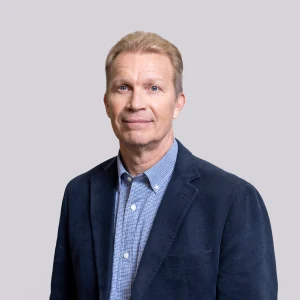
Mika Anttonen, Chairman of the Board of Directors
Urgency defines the decade
Tripling low-emissions energy and doubling energy efficiency by 2030 are not aspirational goals—they are minimum requirements for staying on the Net Zero Emissions by 2050 pathway. Yet the truth is uncomfortable: fossil fuels still supply roughly 80% of global energy, and emissions continue to rise. Current trajectories point to 2.5–2.9°C warming— far beyond the 1.5°C target.
To change course, we must channel resources toward solutions with measurable, scalable impact. Targets should encourage innovation, but just as importantly, they must help commercialise technologies that can reduce emissions at a system level—reliably and cost-effectively.
Scaling what works
The technologies capable of delivering 2030 emissions reductions largely exist already. What is missing is deployment at scale. Investment is one barrier; weak demand signals are another. And as long as fossil alternatives remain cheaper, the adoption of low-emissions solutions will continue to lag.
Biofuels face clear constraints: global sustainable feedstock potential is around 37 million tonnes, compared with more than 1,700 million tonnes of fossil diesel and kerosene consumed today. We simply cannot close that gap with biofuels alone.
Biogas, however, stands out. It is scalable, circular, and proven—well suited for heavy transport, maritime applications, and industry. It can be produced from various feedstocks, including animal manure, agricultural and household waste, wastewater, and forestry byproducts. Using manure as feedstock not only cuts emissions from transport and agriculture by even more than 100% but also produces effective fertiliser. It is a real, working solution.
Hydrogen-based electrofuels are still held back by cost and technology maturity, and the demand frameworks needed for long-term investment are emerging slowly. Meanwhile, rapid electrification is reshaping energy demand patterns. Ensuring system stability will require both balancing power and well-designed capacity markets that reward availability when it matters most.
Innovation for the long horizon
Nearly half of the emissions reductions required by 2050 must come from technologies still in prototype or demonstration phases. Achieving this target will require substantial long-term investment and intensified focus on research and development in the coming years, supported by long-term, stable regulation and a readiness tosupport innovations that may take time mature. Energy transition is, again, a marathon—not only for infrastructure but for innovation itself.
Encouraging breakthroughs such as SuperC superconductivity research, coordinated by Aalto University, and Novatron Fusion Group's (NFG) unique Novatron fusion concept highlight both the potential and the time horizons involved. These are not overnight solutions, but they may ultimately reshape the energy system.
Meeting global climate goals requires a generational mindset. Some of the solutions we invest in today may not reach full scale within our careers. But that is precisely why long-horizon innovation matters: it builds the foundations of a resilient and competitive low-emissions economy for decades to come.
Transition through collaboration
Rebuilding the global energy system is a multidecade task. It resembles upgrading a complex machine while it is still running. The transition must move forward without destabilising the economy.
We need a credible, science-based sequence of actions to guide this change. To ensure every measure contributes to a shared objective, the transition must be built on a clear, science-drive set of steps laid out in the right order. Transition plans must account for the capacities and limits of all stakeholders, especially those most vulnerable. Only strong cross-sector collaboration—between science, climate expertise, policymakers, industry, and society—can deliver a timely, cost-efficient, system-wide transformation. Such collaboration enables each stakeholder to bring their expertise to the table, strengthen mutual understanding,
and build the commitment needed to realise the transition at scale. Energy companies have a central role in the transition. They must develop dynamic, transparent transition pathways anchored in scientific evidence and aligned with net-zero trajectories.
At St1, collaboration is one of our strongest assets. We have consistently strengthened our operations through strategic long-term partnerships across various sectors and have been actively involved in numerous consortia and partner initiatives focused on researching and promoting actions to mitigate climate change.
St1’s latest strategic, long-term industrial partnership was established last year with Novatron Fusion Group by becoming the lead investor in the company. We believe that NFG has a game-changing formula and as an owner with a long-term mindset, we are excited over this opportunity to help accelerate the work towards limitless fossil-free energy.
We are also committed to supporting the development of education and research that fosters the next generation of low‑emissions energy solutions. Later this year, we will donate EUR 3 million to establish two full‑time professorships at Aalto University in new low-emissions energy production solutions and in the development of value chains needed to advance the energy transition. This will further strengthen the scientific foundation required for a credible and collaborative transition.
Mika Anttonen
Chairman of the Board of Directors
Read more in St1's annual review Game Changer 2025.