
From refinery to runway: Sustainable aviation fuel from St1 powers daily Danish flights
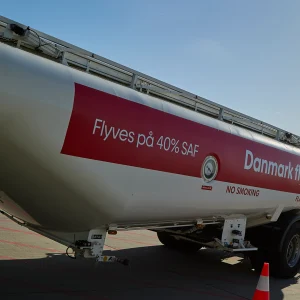
On 4 March, Norwegian’s Aalborg–Copenhagen route began operating with a 40 percent sustainable aviation fuel (SAF) blend produced at St1’s Gothenburg refinery — not as a one-off flight, but as part of scheduled daily service.
Under a three-year agreement, 3,000 cubic metres of SAF will be supplied annually to the route. The fuel is blended and delivered through Denmark’s existing aviation fuel infrastructure, without requiring changes to aircraft or airport systems.
Not a one-off delivery.
“This is scheduled commercial traffic operating with a stable SAF supply,” says Henrikki Talvitie, CEO of St1. “For a producer, that makes all the difference. Long-term agreements allow us to plan feedstock sourcing, refining volumes and logistics in a responsible way.”
The route was established following a Danish state tender designed to stimulate demand for sustainable aviation fuel. Predictable demand is essential for scaling production. Industrial facilities require volume commitments that extend beyond symbolic flights.
High standards
At the Gothenburg biorefinery, allocated renewable raw materials of European origin are refined into aviation-grade fuel certified under ISCC sustainability standards. The SAF is sold via DCC & Shell Denmark, with AFSN facilitating the transaction structure. In practice, this means SAF produced in Sweden enters daily Danish flight operations through established Nordic fuel supply chains.
The 40 percent blend level is significantly higher than current European mandate requirements. While sustainable aviation fuel reduces lifecycle greenhouse gas emissions compared with conventional jet fuel, aircraft engines still emit CO₂ during combustion. However, with a 40 % SAF blend each flight will have around 30 % reduction of total CO₂ emission compared to a flight on regular jet fuel. Annually the Norwegian route between Aalborg and Copenhagen means that emissions from the route are reduced by more than 3,000 tonnes of CO₂ annually, measured across the fuel’s full life cycle.
Consistent deliveries is key
“Aviation is one of the sectors where liquid fuels will remain necessary for the foreseeable future,” says Talvitie. “If emissions are to be reduced, the solutions must work within today’s infrastructure. Industrial-scale production, verified feedstock and functioning logistics are what make increased SAF use possible in practice.”
At Aalborg Airport, political leaders and industry representatives gathered to mark the start of operations. For St1, however, the milestone lies not in the ceremony, but in continuity. Delivering certified fuel consistently, year after year, is what turns sustainable aviation fuel from pilot initiative into part of everyday flight operations.
Photo: Clienti